
Projects
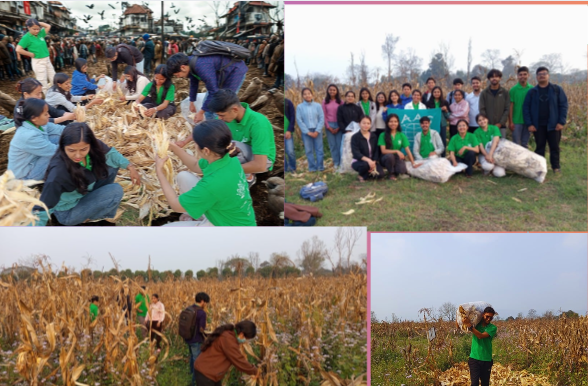
Maize Husk Collection-Trash to Treasure Phase II
Year: 24th February,2025
Theme: Village Concept Project
IAAS Committee: IAAS Nepal LC AFU
Description
Aims to upcycle agricultural waste into artworks and aesthetic objects. Promotes sustainability and supports local economic growth. Highlights the potential of farm waste in producing handcrafted products.
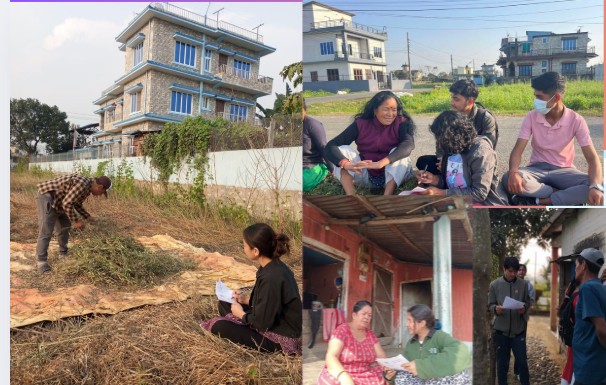
Survey on Trash To Treasure for Phase II
Year: 21-22 Feb 2025
Theme: Village Concept Project
IAAS Committee: IAAS Nepal LC AFU
Description
Conducted 2-day survey in Rampur, Assessed maize husk and rice straw usage among 80+ households and 10+ hotels Collected key data on agricultural residue handling trends and concerns Initiated "Trash to Treasure - Phase II" Focused on empowering local women with skills to recycle farm waste into decorative items
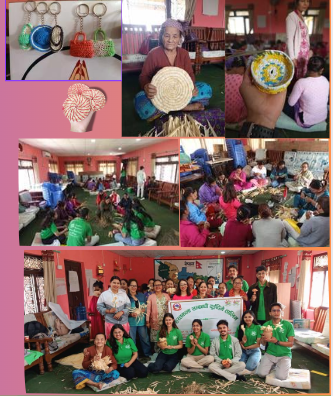
TRASH TO TREASURE PHASE (I TO III)
Year: 2024 and 2025
Theme: Village Concept Project
IAAS Committee: IAAS Nepal LC AFU
Description
"Trash to Treasure" is an environmental sustainability project focused on converting agricultural waste materials(like maize husks, siru grass) into useful and creative products like dhakiya, chakati, flowers and other items. The project aims to promote recycling, reduce waste generation, and encourage students and community members to practice resource conservation. Phase-I In the first phase, IAAS general members 2023/24 receive hands-on training on how to create dhakiya, chakati, and various decorative items using waste and unused agricultural materials. This phase focuses on equipping members with practical upcycling skills so they can later become trainers and facilitators. Phase-II After the first phase, IAAS Nepal LC AFU, in collaboration with Bharatpur Municipality Ward No. 15, provided a 2 days training session mainly targeted to the women of Bharatpur, delivered by our qualified trainer. This phase promotes income generation, supports women's empowerment, and shows the community how waste can be turned into valuable products. Phase-III In the third phase, the project focuses on training the general members of the 2024/25 tenure to create various eco-friendly products using maize husk. This phase teaches participants how to clean, process, and convert maize husk into valuable items such as decorative crafts, small household products, gift items, and artistic designs.
Objectives
● Transform agricultural waste (rice straw, maize husk) into sustainable handicrafts and useful products.
● Promote skill development and income generation for rural women and youth.
● Reduce environmental impacts of agro-residue burning while advancing circular economy practices.
Achievements
The Trash to Treasure project resulted in the training of general members 2023/24 and 2024/25 tenure, local women of Bharatpur Municipality, in making dhakiya, chakati, decorative items, and maize husk-based crafts. Participants produced tangible craft items during the sessions.
Remarks
Running
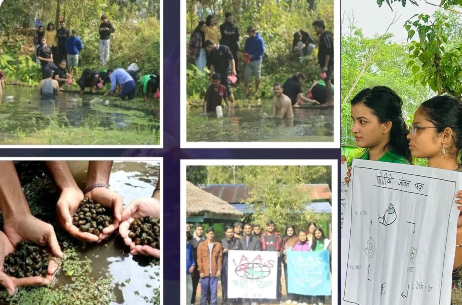
Heliciculture: A Hope to Be Flourished
Year: 2023
Theme: Woman in Agriculture (WIA)
IAAS Committee: IAAS Nepal LC AFU
Description
This project focuses on commercial snail farming for human consumption, a profitable business requiring low capital, minimal labor, and limited land. It aims to enhance women’s income, improve livelihoods, and promote sustainable community development through a manageable and scalable farming system.
Objectives
● Establish a commercial snail farming system for women entrepreneurs.
● Increase women’s income and livelihood opportunities.
● Promote sustainable agricultural business practices in the community.
Achievements
Project preparatory phase planned; implemented in Padampur ghongi rearing.
Remarks
Completed
Banenthu
Year: 2022
Theme: No Food Waste (NFW)
IAAS Committee: IAAS Nepal LC AFU
Description
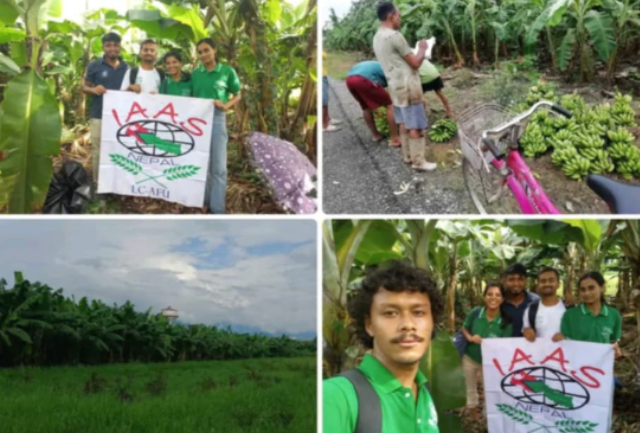
Banenthu” is an innovative initiative focused on transforming waste into wealth by utilizing leftover banana pseudostems. The project aims to reduce pollution while providing additional income to farmers. By converting banana pseudostem fibers (coarse and soft) and organic sap into handicrafts, ropes, garments, textiles, bags, footwear, PGR, and biodegradable sanitary pads, the project emphasizes sustainable resource utilization and circular economy practices.
Objectives
● Utilize banana pseudostem fibers and sap to produce valuable, eco-friendly products.
● Reduce agricultural waste and environmental pollution.
● Generate additional income for local farmers through innovative product development.
Remarks
Completed